CRISPR fungus: Protein-packed, sustainable, and tastes like meat
Posted by rguiscard 12 hours ago
Comments
Comment by dbcooper 4 hours ago
The paper notes:
>It is important to note that MP products often contain elevated levels of nucleic acids, constituting ~8% of the dry weight [17], which necessitates consideration when assessing their suitability for human consumption. To address this, a heat treatment process is employed at the end of fermentation that reduces the nucleic acid content in the fermented biomass to below 0.75/100 g, while simultaneously deactivating protease activity and F. venenatum biomass. However, this procedure has been observed to induce cell membrane leakage and a substantial loss of biomass, as evidenced in the Quorn production process [17], which also utilizes F. venenatum as the MP producer. Our experimental trials have encountered similar challenges, achieving a biomass yield of merely ~35%, and observed that heating process increased the relative protein and chitin content (Figure 2D,E), which may be related to the effect of membrane leakage, while the intracellular protein of the FCPD engineered strain was less likely to be lost to the extracellular. Thus, concentrating the fermentation broth to enhance protein and amino acids content in successive steps to produce a highly nutritious water-soluble fertilizer appears to be an effective strategy for adding value to the process (Figure 1).
The challenges of developing economic single cell protein products, that are suitable for human consumption, are described in chapter 3 here:
https://www.researchgate.net/profile/Martin-Hofrichter-2/pub...
Comment by meindnoch 3 hours ago
Comment by gsf_emergency_6 4 hours ago
https://www.sciencealert.com/massive-study-reveals-where-gou...
Comment by anotherpaul 6 hours ago
If I understand this right, this would even in the EU now be allowed to be sold without the GMO label.
Comment by aydyn 5 hours ago
Comment by fsckboy 4 hours ago
not in a meaningful way, no. the probability that a new mutation you want will occur is much much lower than the probability you can breed offspring without a gene that's already in the bloodline.
Comment by viciousvoxel 3 hours ago
Comment by ACCount37 2 hours ago
Comment by SapporoChris 9 hours ago
Comment by jcfrei 1 hour ago
Comment by Flere-Imsaho 4 hours ago
Comment by Semaphor 16 minutes ago
Comment by ggm 4 hours ago
Comment by buu700 5 hours ago
Comment by shrubble 6 hours ago
Comment by tdb7893 6 hours ago
Comment by swiftcoder 5 hours ago
That's a pretty substantial backyard operation.
Comment by literalAardvark 2 hours ago
They would probably need more pasture in monoculture hellholes that have cornfields for 100km in each direction.
Comment by swiftcoder 1 hour ago
Comment by vintermann 3 hours ago
At least where I live, you can't have chickens in quite the same way our great-grandparents had. You need to comply with veterinary regulation for one, and for good reasons.
Comment by _dark_matter_ 4 hours ago
Comment by swiftcoder 3 hours ago
Comment by jrjeksjd8d 19 minutes ago
Comment by truekonrads 6 hours ago
Comment by Certhas 6 hours ago
In the US per capita chicken consumption is 100 pounds per year.
Comment by johanvts 5 hours ago
Comment by asterix_pano 6 hours ago
Comment by exe34 6 hours ago
Comment by bawana 7 minutes ago
Comment by dan_hawkins 6 minutes ago
Comment by chasil 9 hours ago
"The first modification, eliminating a gene for chitin synthase, resulted in thinner fungal cell walls."
This also has an enormous potential benefit of reducing avian flu and other zoonotic bird diseases.
Comment by aitchnyu 6 hours ago
for humans, does shellfish allergy (tropomyosin and other proteins) diagnosis imply chitin allergy?
Comment by boxed 7 hours ago
How?
Comment by curtisf 7 hours ago
Although it's theoretically possible for a disease to infect both fungus and animals, because the biology is so different, the risk is greatly, greatly reduced.
In addition, it may be possible to reduce the use of treatments such as antibiotics which, in their currently mass application to farmed animals, could directly lead to the development of antibiotic resistant in diseases which affect humans and animals.
Comment by brnt 3 hours ago
I mean, industrial slaughter isn't a pretty process, even in better plants, which most aren't, but where they come to wipe out the barn, they're not putting animal welfare first.
Comment by vintermann 4 hours ago
Comment by literalAardvark 2 hours ago
It might be some Big Meat conspiracy to combat these upstarts, but there's also reasonable data indicating that less processing results in better health outcomes.
Comment by vintermann 49 minutes ago
We want causal correlations. Someone decided that instead they wanted to divide food into categoried in this specific way, and then rank categories. And I don't think all of them were naive about what they were doing. I've read Merchants of Doubt, I don't give harmful industries the benefit of doubt when it comes to things like this.
Comment by padjo 2 hours ago
Comment by literalAardvark 2 hours ago
Comment by fuzzy_biscuit 35 minutes ago
Comment by anotherpaul 6 hours ago
Comment by torginus 3 hours ago
This really looks like an attempt to get investors to come back and push the stock price.
Comment by andrelaszlo 2 hours ago
Comment by cregy 4 hours ago
Comment by sgt 1 hour ago
Comment by SilentM68 6 hours ago
Comment by brnt 3 hours ago
Comment by Bad_Initialism 6 hours ago
Comment by metalman 3 hours ago
Comment by westmeal 2 hours ago
Comment by notepad0x90 8 hours ago
Jell-o (gello?) is a good example, nothing tastes like it naturally. Why aren't there tasty food that are original in terms of taste and texture but good for health and the environment? I suppose part of the struggle is that food is entrenched into culture so much. burgers and bbq are inextricable from july 4th and memorial day for example.
Comment by awestroke 7 hours ago
Jell-O actually proves this rather than refuting it. It succeeds because it hits that hardwired sweet preference, not because it invented some novel taste dimension. A truly new taste that doesn’t map onto the existing five basics would likely register as “off” rather than delicious. Your brain wouldn’t know what to do with it, nutritionally speaking.
So you’d have to either work within those existing taste channels while creating novel combinations and textures, or somehow condition people to associate genuinely new sensations with safety and reward. The latter is slow going. We’re quite literally built to be suspicious of unfamiliar foods.
Comment by tsimionescu 5 hours ago
We have five taste receptors, so it's it's actually impossible to get something that doesn't map unto those five. Instead, what we call the taste of food, and what GP was referring to, is actually the smell of food, or more commonly, its aroma, which we can detect both from the outside by sniffing it with our noses, and while it is in our mouths via molecules wafting up to our respiratory tract.
Unlike the simplicity of taste, we have a huge array of smell receptors, with most of them having much more indirect associations, if any, with any specific survival need. It's very much possible, and in fact quite common, to synthesize novel smells/aromas which don't resemble any natural food.
Comment by 9dev 3 hours ago
Slightly unrelated, but what I find very cool is thinking about your taste sense as a hyper-sensitive molecule detector. Individual aromas are just the signal your brain generates for different kinds of molecules, and it's very good at that. That's why at wine tastings, for example, people come up with all these elaborate terms for specific aromas—it's a way to name the molecule composition.
Comment by majkinetor 4 hours ago
At first. If the food has nutrients that are important to the brain, it will recognize that in the future. There are animal experiment confirming this.
Comment by edent 7 hours ago
There are also a wide variety of textures that are heavily industrialised. If you go to some fine dining restaurants, you'll find smells and colours which you simply cannot replicate at home - let alone make from scratch.
Most synthetic meat and fish is really just a flavour carrier for whatever sauce people like. I've had imitation chicken, shrimp, beef, crab, etc. They all taste great - but that's mostly because the sauces are the same as their meaty counterparts.
Comment by qingcharles 7 hours ago
Comment by dentalnanobot 6 hours ago
Comment by bcoates 7 hours ago
Comment by dkbrk 7 hours ago
Do you mean processing ingredients with the goal to take cheap ingredients and make a product as hyper-palatable as possible? That would generally be called "ultra-processed food"; you're not going to find a Doritos chip in nature.
Do you mean developing completely completely new flavors via chemical synthesis? I don't think there's much possibility there. Our senses have evolved to detect compounds found in nature, so it's unlikely a synthetic compound can produce a flavor completely unlike anything found in nature.
Also, I think you're overestimating jelly. Gelatine is just a breakdown product of collagen. Boil animal connective tissue, purify the gelatine, add sugar and flavoring and set it into a gel. It's really only a few of techniques removed from nature. If you want to say it's not found in nature, then fair enough, but neither is a medium-rare steak.
Comment by Certhas 5 hours ago
I guess for casual buyers having a familiar reference point is just crucial.
Comment by refactor_master 26 minutes ago
Comment by throwaway808081 49 minutes ago
Comment by Vanit 7 hours ago
Comment by aydyn 5 hours ago
Comment by globular-toast 4 hours ago
Comment by h-c-c 7 hours ago
Comment by isodev 7 hours ago
Remember the target audience - people would rather drink and die from raw milk than get a shot for a completely preventable sickness.
Comment by cwillu 6 hours ago
Comment by wartywhoa23 2 hours ago
Comment by ITniggah 2 hours ago
Comment by fithisux 6 hours ago
This is a huge disadvantage. Not every farmer is a biological research institute.
Comment by swiftcoder 4 hours ago
Comment by VladVladikoff 9 hours ago
Comment by kalessin 8 hours ago
Comment by otabdeveloper4 7 hours ago
... let's start on tearing down bullshit AI datacenters.
Oh no, a billion Nvidia cards are envronmentally friendly, you say, better to lazer-focus on the cow farts?
Comment by curtisf 6 hours ago
In contrast, all data centers (not just AI) currently use less than 1.5% of all electricity, making up less than 0.3% of global emissions [2]. Although recent increases in data center electricity usage is lamentable, even in the short term future, much of this can and more importantly _will_ be low-carbon energy, and the ratio should continue to improve with time.
A 1% reduction in livestock emissions is therefore about the same as a 50% reduction in data center emissions.
[1]: https://thebreakthrough.org/issues/food-agriculture-environm...
[2]: https://www.carbon-direct.com/insights/understanding-the-car...
Comment by otabdeveloper4 5 hours ago
Comment by literalAardvark 2 hours ago
Minimizing cow farts is simply a better focus.
Comment by otabdeveloper4 1 hour ago
Comment by mos87 6 hours ago
Comment by Dylan16807 6 hours ago
Comment by mos87 6 hours ago
Comment by ragequittah 6 hours ago
Comment by mos87 6 hours ago
It's a bit extreme to refer to that "climate" summit "guests" as cattle, but I won't deny it gave me a chuckle.
>the inhumane conditions in which the cattle are raised
Gosh, that's sad. One way to go about it is to vote with your hard-earned and only buy meat from the Ethically Raised in the Swiss Alps Cows that look quite happy on the photos then.
Comment by ben_w 1 hour ago
In a discussion about genetically modified fungus as a meat substitute?
Comment by kleiba 6 hours ago
Comment by asterix_pano 6 hours ago
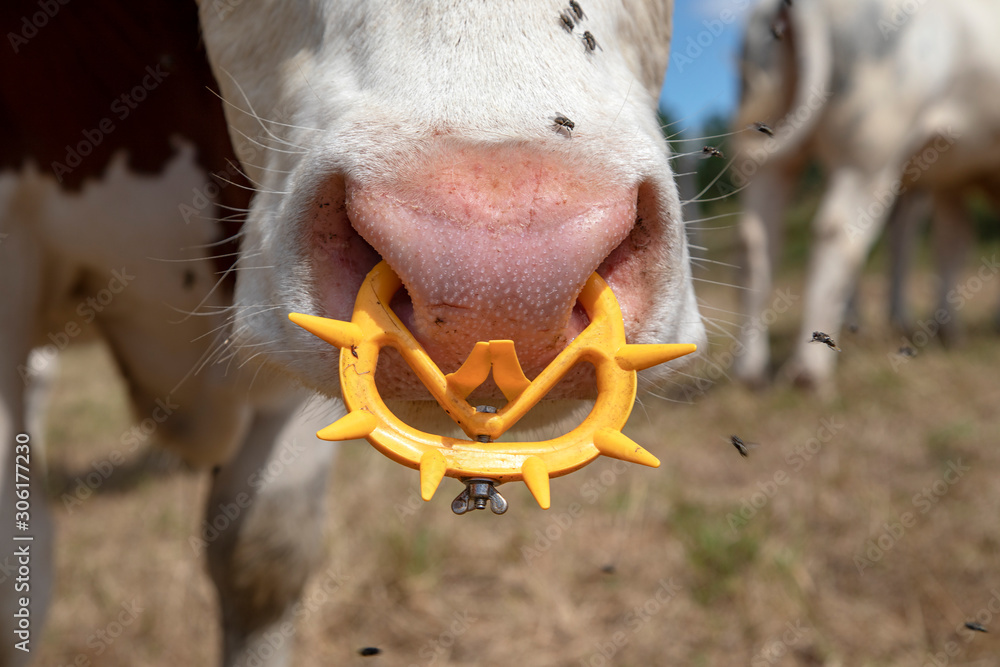
Comment by clort 5 hours ago
It certainly does not look very nice, are you relating this to the "Ethically Raised in the Swiss Alps Cows" in the comment you replied to?
In truth, they just take the calves away from the mothers after a short while, ship them out to the abbatoir. There is no benefit to them being in the same enclosure with a spiky nose ring, it seems that this must have a different purpose than the one you mentioned.
Comment by swiftcoder 4 hours ago
Comment by otabdeveloper4 5 hours ago
Comment by ben_w 1 hour ago
Now? Now meat's mostly a problem, not a good thing. Even if you ignore every ethical argument, regardless of if your concerns are your own health or the environment, meat's not good.
Data centres… well, I think this is a bubble, I also want it to be a bubble for various reasons, but the AI running on them today is in fact already useful.
Even if current AI wasn't at all useful (despite it having about half to one quarter of the market size as meat already), it does so at a cost orders of magnitude lower environmental harm than meat. Convincing half of the population to have "meat-free Mondays" (so, reducing consumption by 1/14th) would do more than switching off all the AI DCs, given the estimates from Greenpeace for AI https://www.greenpeace.de/publikationen/20250514-greenpeace-... and Our World In Data's estimates for livestock and manure https://ourworldindata.org/ghg-emissions-by-sector
Comment by pstuart 4 hours ago
Details are a bit vague but it seems like it's viable.
Comment by akoboldfrying 6 hours ago
Comment by b59831 8 hours ago
Comment by NedF 7 hours ago
Comment by EarlKing 6 hours ago
Comment by globular-toast 4 hours ago
If you want to do this for ethical reasons, which you should, then just eat vegetables. They taste way better. You just have to recalibrate your senses to deal with the higher levels of flavour.
But if people really want "chicken nuggets" for some reason then there's no reason it should have to involve animals at all, so this is a good thing, I guess.
Comment by wongarsu 3 hours ago
There are plenty of vegetarian meals (or vegan ones, though that's harder). It's just that we have relegated most of them to side dishes, entres or breakfast because meat is too popular as a main dish. But this is a very recent phenomenon
But you can't make any money selling hash browns as veggie food, it's much more profitable to sell fake meat
Comment by walterlw 4 hours ago
Comment by _dark_matter_ 4 hours ago
I am so thankful of advances that let me eat something my brain enjoys. I get the best of both worlds - no animal harmed in the process.
Why do vegs have to neg on other vegs for what they eat? I hate that. To each their own. I encourage everyone to be vegetarian to support animal rights, but I also would never tell them that their cravings aren't real or how to go about doing it.
Comment by globular-toast 2 hours ago
It's not a "neg", it's my opinion. I don't think you need to crave meat, you are just lacking the proper cuisine that would satisfy you completely. Try Gobi 65 and you'll never crave "spicy chicken wings" again. I feel like people go veggie by just removing meat from a cuisine that is centred around it. Imagine British food without meat: nothing and mash, nothing and chips, roast nothing... mmm... delicious. You need to completely change. There's nothing "missing" from a vegetarian Indian meal.